

What is Body Condition Score (BCS)?
Body Condition Score (BCS) is a simple and practical method used to assess the nutritional status and overall health of a dairy cow. It is based on visually observing and feeling how much fat and muscle a cow has on key parts of her body.
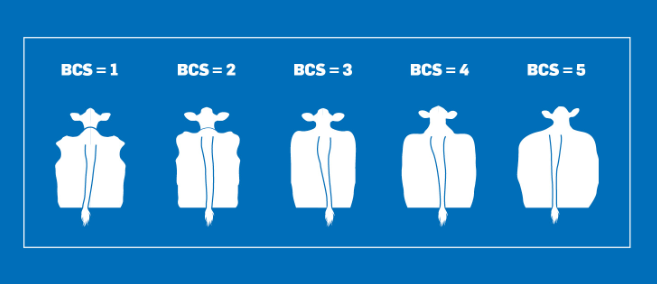
BCS is measured on a scale from 1 (very thin) to 5 (extremely fat). This method is widely used around the world and is especially valuable for African dairy farmers because it does not require equipment, technology, or high costs.
Why is BCS important?
Many farmers face challenges such as:
- Seasonal feed shortages
- Drought and climate variability
- Limited access to veterinarians or feed analysis
Body Condition Score helps you make better decisions using what you can see and feel. Correct use of BCS helps to:
- Increase milk production
- Improve cow health and immunity
- Enhance fertility and calving success
- Reduce feeding costs by avoiding over‑ or under‑feeding
A cow with the correct body condition is more productive, lives longer, and brings more income to the farm.
Understanding the Body Condition Score Scale
BCS 1 - Poor condition (Severely underfed)
This cow is in very poor health and suffering from serious malnutrition.
Characteristics:
- Skeletal structure clearly visible
- Sharp spine, hips, and shoulders
- Ribs very visible
- Deeply sunken tail-head area with no fat
- Skin remains supple, but the coat is often rough
Characteristics:
- Extremely low milk production
- High risks of disease and death
- Very poor fertility
Action: Immediate nutritional support and health attention are required.
BCS 2 – Moderate Condition (Thin)
The cow is still thin but not in critical condition.
Characteristics:
- Bones still visible but less sharp
- Ribs faintly visible
- Small amount of fat under the skin
- Tail-head area slightly hollow
Risks:
- Milk production below potential
- Weak body reserves
Action: Improve feed quantity and quality to help the cow gain condition.
BCS 3 – Good Condition (Ideal)
This is the ideal body condition for most dairy cows
Characteristics:
- Balanced distribution of muscle and fat
- Hip bones slightly visible
- Ribs not visible
- Smooth. healthy body shape
- No hollow at the tail-head area
Characteristics:
- Optimal milk production
- Strong immunity
- Better fertility and calving performance
BCS 4 – Fat Condition (Overweight)
The cow has started to accumulate too much fat.
Characteristics:
- Hip bones and ribs not visible
- Thick fat layer
- Tail- head feeds lumpy due to fat deposits
- Rounded body shape
Risks:
- Difficult calving
- Higher change of metabolic and health problems
Action: Reduce high-energy feeds and encourage movement if possible.
BCS 5 – Too Fat (Obese)
This condition is unhealthy and risky.
Characteristics:
- Excessive fat all over the body
- Fully rounded appearance
- Hips and ribs cannot be felt, even with firm pressure
- Tail‑head area heavily swollen with fat
Risks:
- Serious health problems
- Poor milk production after calving
- Increased veterinary
Practical tips for using BCS on your farm
- Check body condition regularly (for example, once per month)
- Always look and feel, especially around hips, ribs, and tail‑head
- Assess cows individually (young cows, pregnant cows, lactating cows)
- Keep simple records to track changes over time


